
About the Project
On the surface, the business looked stable.
They had long-term clients.
Operations were running.
Revenue was steady — most of the time.
But growth was slow.
New opportunities were limited.
Lead flow was inconsistent.
And expansion depended heavily on existing relationships.
The business wasn't struggling.
But it wasn't scaling either.
The Hidden Risk of Relationship-Only Growth
Like many logistics companies, the approach was familiar:
Maintain relationships → secure contracts → grow gradually
And for a while, it worked.
But over time, limitations became clear.
- Referrals were unpredictable
- New business opportunities came in slowly
- There was no structured way to generate demand
Which meant:
Growth depended on timing, connections, and chance.
And in a competitive B2B environment:
that creates a ceiling
The Real Problem
The issue wasn't demand.
There were companies actively looking for logistics partners.
The problem was:
the business had no system to consistently attract and convert them
The company lacked:
- a defined B2B marketing strategy
- inbound lead generation channels
- a structured pipeline
So even when opportunities existed…
they were not captured early
and competitors often reached them first
The Shift: From Passive Growth to Active Pipeline Building
Instead of waiting for opportunities, we made a strategic shift:
Build a system that consistently generates and qualifies B2B demand
We implemented a structured B2B Revenue Pipeline System.
Demand Generation
We launched LinkedIn campaigns and targeted B2B outreach, reaching decision-makers actively seeking logistics solutions.
Funnel Structure
Service-specific landing pages were designed to clearly communicate capabilities and filter serious enquiries.
CRM Integration
All leads and opportunities were tracked, providing full visibility across the deal pipeline.
Follow-up Automation
Nurture sequences and sales workflows ensured that prospects were engaged consistently throughout the decision process.
What Happened Next
The shift created clarity — and momentum.
Within 3 months:
- Leads increased by 35%
- Visibility across opportunities improved
For the first time, the business could see a structured pipeline forming.
By month 6:
- Contracts increased by 50%
- Conversion rates improved
More qualified opportunities were turning into signed deals.
By month 12:
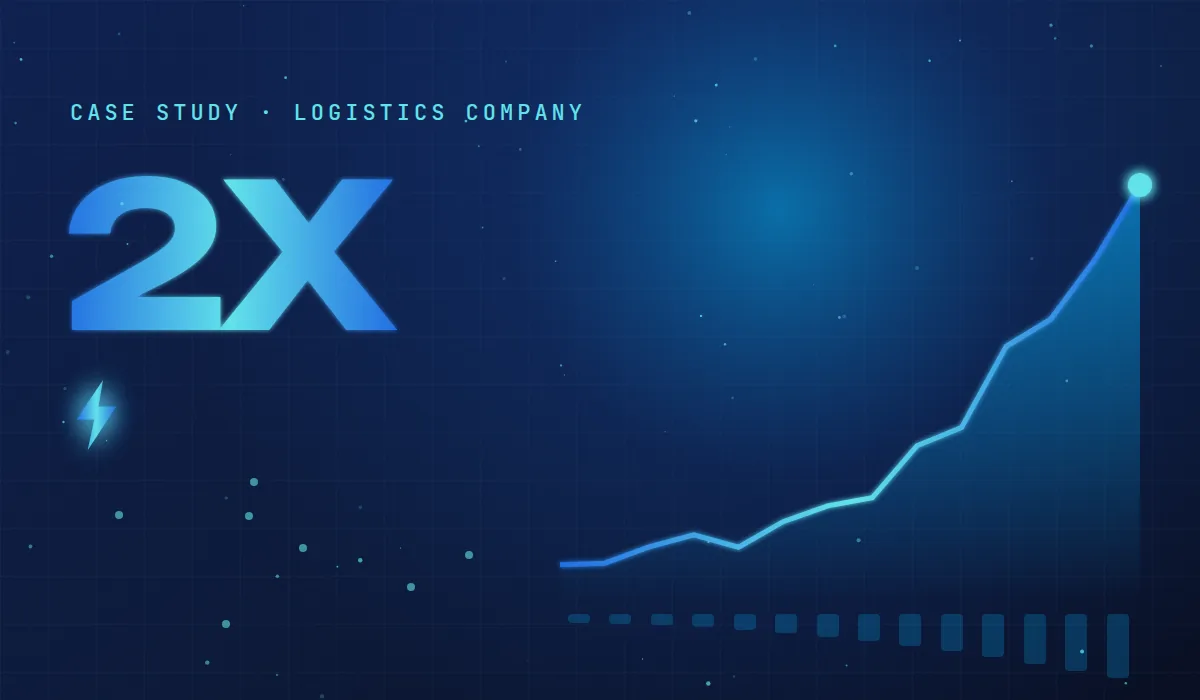
- Revenue doubled (2X)
- A stronger and more predictable B2B pipeline was established
Growth was no longer dependent on referrals alone.
What This Really Means
The company didn't just generate more leads.
It gained control over how contracts were created.
From:
- waiting for referrals
- relying on relationships
- growing slowly
To:
a system that consistently generates, tracks, and converts B2B opportunities
Because in logistics:
You don't grow by waiting for contracts —
you grow by building a pipeline that produces them.
Once that system was in place,
growth stopped being passive…
and became deliberate and scalable.