
Our Work
About the Project
From the outside, the business looked successful.
Events were happening.
Clients were booking.
Revenue came in — in bursts.
But behind the scenes, it was unpredictable.
Some months were fully booked.
Others were completely quiet.
And revenue depended heavily on seasons and referrals.
The business wasn't stable.
It was swinging between peaks and droughts.
The Hidden Cost of Seasonal Growth
Like many event companies, the pattern was familiar:
Busy season → high revenue → slow season → wait
And over time, this created a serious problem.
- Demand came in waves, not consistently
- There was no system to generate enquiries during off-peak periods
- Idle capacity meant lost revenue opportunities
Which meant:
When the calendar wasn't full — revenue stopped.
And when revenue depends on timing:
growth becomes unpredictable
The Real Problem
The issue wasn't demand.
There were always businesses and individuals planning events.
The problem was:
the company had no system to capture demand consistently
The business lacked:
- continuous lead generation
- retargeting to re-engage prospects
- a structured booking funnel
So even when interest existed…
it wasn't converted into steady bookings
The Shift: From Seasonal Spikes to Consistent Pipeline
Instead of relying on peak periods, we made a strategic shift:
Build a system that fills the calendar — all year round
We implemented a structured Demand and Booking System.
Demand Generation
We launched paid campaigns and retargeting strategies, ensuring a steady flow of enquiries regardless of season.
Funnel Structure
Event-specific landing pages were designed to guide prospects toward booking with clarity and ease.
CRM Integration
Enquiries were tracked and managed through a centralised system, giving full visibility over the booking pipeline.
Follow-up Automation
Engagement sequences and booking workflows ensured that every enquiry was nurtured until conversion.
What Happened Next
The impact was immediate — but more importantly, it was consistent.
Within 3 months:
- Enquiries increased by 60%
- Lead flow became more stable
The business no longer depended solely on peak periods.
By month 6:
- Bookings increased by 75%
- Seasonality impact reduced significantly
The calendar started filling up more evenly.
By month 12:
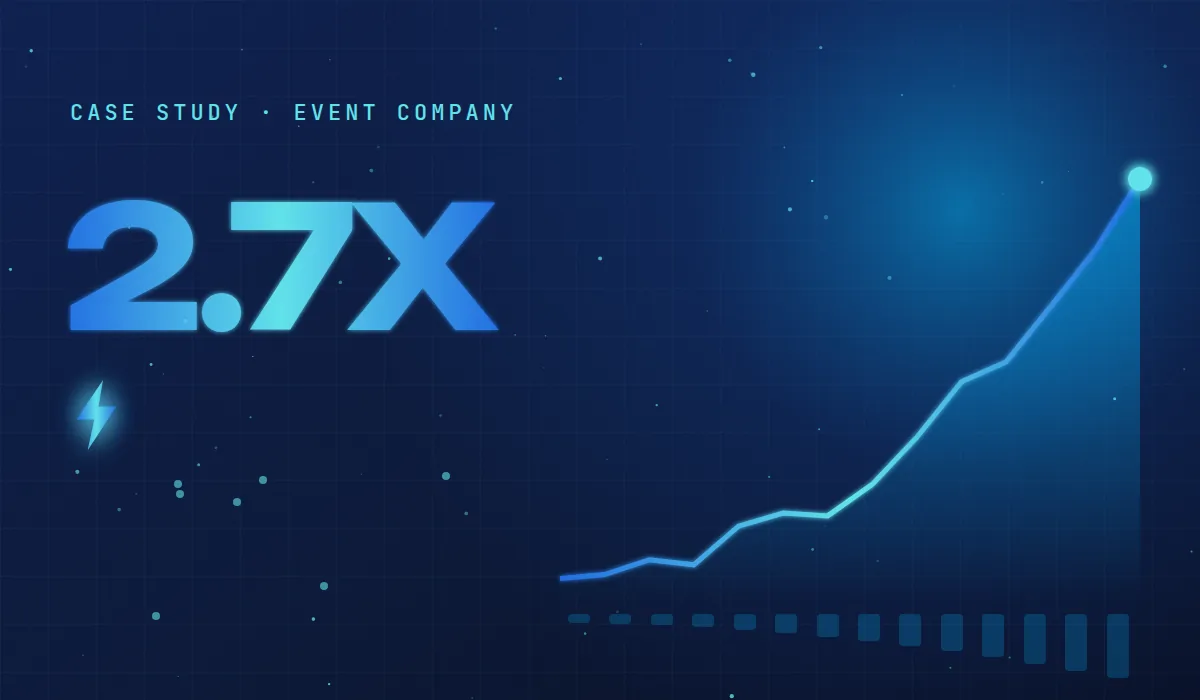
- Revenue increased by 2.7X
- Growth became stable and predictable
The business moved from reactive to controlled.
What This Really Means
The company didn't just generate more enquiries.
It gained control over its calendar.
From:
- waiting for peak seasons
- relying on referrals
- experiencing revenue swings
To:
a system that consistently generates and converts bookings
Because in the events business:
If your calendar isn't filled, your revenue isn't secured.
Once that system was in place,
the business stopped reacting to demand…
and started creating it consistently.