
About the Project
At first glance, the brand looked like it was growing.
Orders were coming in. Ads were performing. New customers were being acquired.
But behind the numbers, there was a problem.
Most customers only purchased once. Engagement dropped quickly after the first sale. And every new order depended on paid ads.
Revenue wasn't compounding.
It was being re-bought every month.
The Hidden Cost of One-Time Customers
Like many beauty brands, the strategy was simple:
Acquire more customers → generate more sales
And for a while, it worked.
But over time, the cracks became clear.
- Repeat purchase rates were low
- Customers were not being re-engaged
- There was no structured post-purchase journey
Which meant:
Every sale required new spend. Customer acquisition costs stayed high. Profitability became harder to sustain.
The business wasn't lacking demand.
It was failing to retain it.
The Real Problem
The issue wasn't traffic.
It was what happened after the first purchase.
The brand lacked:
- a retention strategy
- customer segmentation
- lifecycle marketing
So even when customers bought…
they were not guided to buy again
And without repeat purchases:
revenue cannot scale efficiently
The Shift: From Acquisition to Customer Value
Instead of increasing ad spend, we made a strategic shift:
Maximise the value of every customer — not just acquire new ones
We rebuilt the brand's system around retention and lifetime value.
Demand Generation We implemented retargeting campaigns and audience segmentation, re-engaging past visitors and customers.
Funnel Structure Product journeys were optimised with upsell and cross-sell flows, increasing purchase value.
CRM Integration Customer behaviour and purchase history were tracked, enabling smarter segmentation and targeting.
Follow-up Automation Email sequences and repeat purchase campaigns ensured that customers stayed engaged after their first order.
What Happened Next
The results didn't come from more traffic — they came from better use of existing customers.
Within 3 months:
- Repeat purchase rate increased by 20%
- Customer engagement improved significantly
Customers started coming back.
By month 6:
- Customer lifetime value increased by 35%
- Retention became more consistent
Revenue began to build on itself.
By month 12:
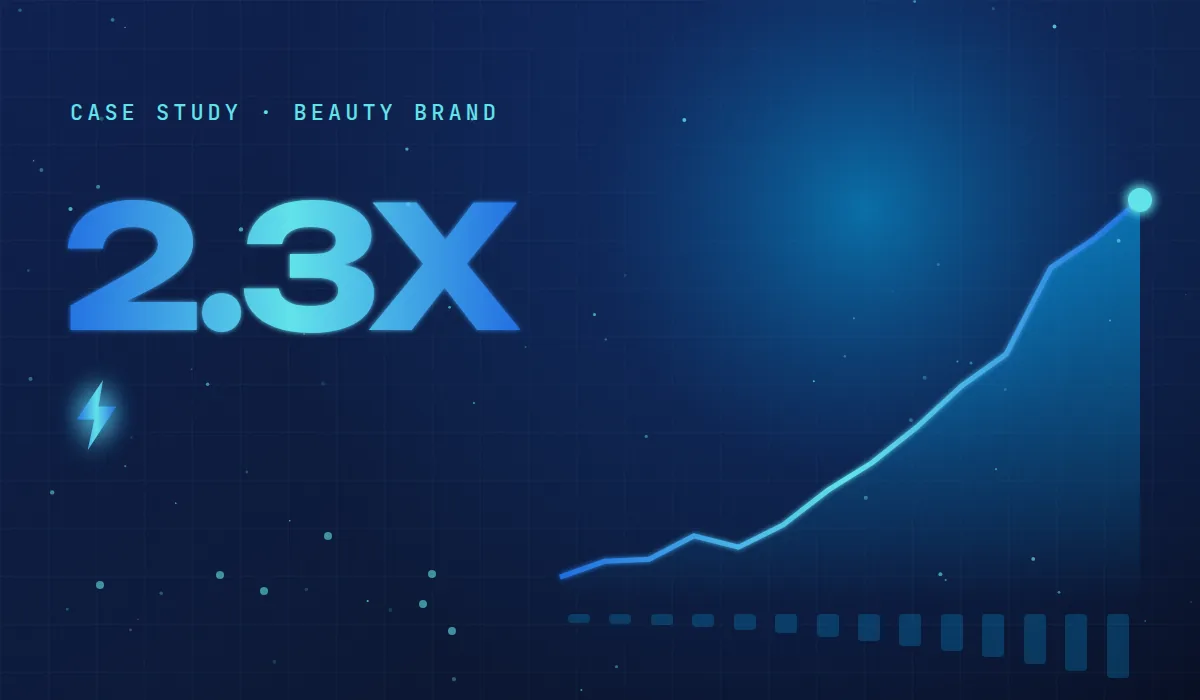
- Revenue increased by 2.3X
- Dependence on paid acquisition reduced significantly
The business was no longer relying on ads to survive.
What This Really Means
The brand didn't need more customers.
It needed to stop losing the ones it already had.
Because in beauty and e-commerce:
Real growth doesn't come from the first purchase — it comes from the second, third, and fourth.
Once retention was fixed, revenue stopped resetting…
and started compounding.